Decode the Hidden Wildlife
Five animal puzzles. Two difficulty levels. One satisfying reveal.
These printable mystery mosaics turn wildlife artwork into a color-by-number experience. Start with the numbered cells, follow the color key, and watch each animal emerge piece by piece.
 Panda
 Lion
 Tiger
 Elephant
See the Mystery Mosaic Process
The easiest way to understand the concept is to look at the visual stages. The reference shows the animal you are working toward, the printable puzzle gives you the numbered structure, and the finished mosaic shows what happens when the colors are matched correctly.
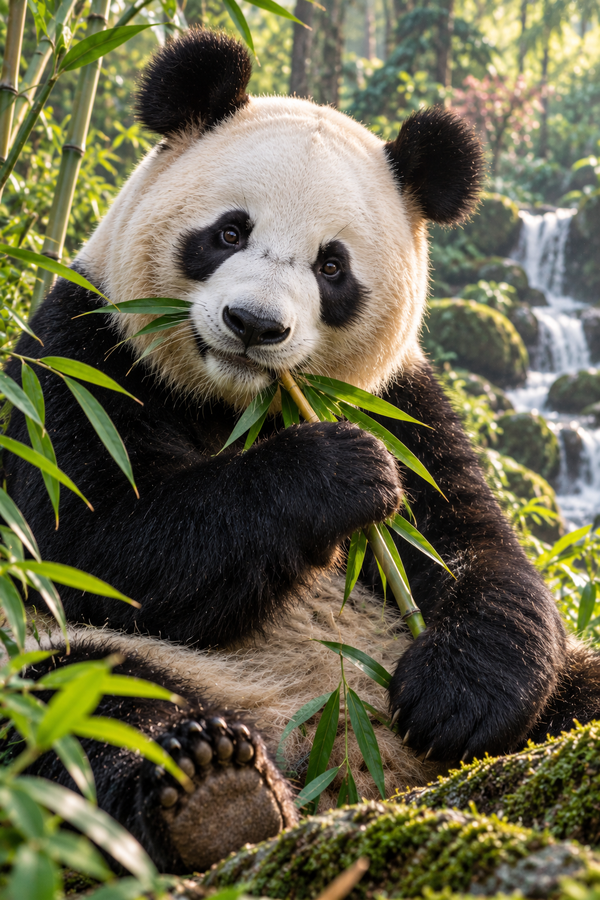
Reference
This is the visual reference: the animal’s shape, markings and features give the mosaic its recognizable structure.

Numbered Puzzle Example
This is a numbered mystery-mosaic example. Each number corresponds to a color in its key, and the animal is gradually revealed as you work through the cells.
Finished Mosaic
Once the numbered areas are colored, the hidden animal becomes a complete mosaic artwork.
Reference → numbered puzzle → finished reveal. These visuals illustrate the three stages of the method; the numbered example is a Red Panda, while the reference and finished reveal are Panda examples.
How to Complete One
What Makes a Mystery Mosaic Different?
A regular coloring page gives you the picture first. You can see the outline, decide where the colors should go, and begin filling it in. A mystery mosaic changes that relationship: the image is intentionally hidden behind a system of numbered cells.
That means every small area has a purpose. A single color may seem insignificant on its own, but dozens of correctly colored cells gradually create the eyes, ears, fur patterns, shell, mane or silhouette that makes the animal recognizable.
The puzzle is the picture
You are not only coloring an illustration; you are decoding it. The finished image becomes the result of following the number-and-color system.
The reveal happens gradually
Early progress can look abstract. As more areas are completed, recognizable shapes begin to connect and the hidden subject becomes easier to read.
Small details matter
Eyes, facial markings, stripes, patches and shell patterns can depend on many small numbered regions. Careful coloring helps preserve the intended visual structure.
Different animals feel different
Foxes, big cats, marine animals and long-necked animals have different silhouettes and markings, so each puzzle has its own visual rhythm.
Choosing the Right Animal to Start With
If this is your first mystery mosaic, think about the type of image you enjoy most rather than choosing only by difficulty. A recognizable silhouette can make the reveal especially satisfying, while a detailed portrait gives you more small areas to work through.
| Animal | Visual character | What makes it interesting |
|---|---|---|
| Red Fox | Pointed ears and flowing silhouette | Clear facial and body landmarks |
| Red Panda | Rounded face and strong markings | Soft portrait shapes and contrast |
| Lion | Large mane and central face | Portrait-style reveal with strong focal areas |
| Sea Turtle | Shell, flippers and organic contours | A marine subject with a different shape language |
| Giraffe | Long neck and irregular patches | Distinctive pattern and silhouette |
From the First Cell to the Final Reveal
The beginning of a mystery mosaic is often the most deceptive part. A page full of numbers and outlined regions does not immediately look like an animal portrait. That is intentional. The artwork is waiting for the color relationships to be completed.
As you continue, clusters of color start forming. A darker group may define an eye or marking. A lighter region may establish the face or body. Larger shapes begin to connect with smaller details, and eventually the overall silhouette becomes obvious.
This is also why it can be useful to pause occasionally instead of coloring continuously for a long stretch. Looking at the page from a little farther away can make the emerging image easier to recognize than viewing individual cells up close.
The satisfying moment
The strongest part of the process is often not the last cell itself, but the moment when you suddenly recognize the animal before the page is completely finished.
Ideas for Using Your Finished Mosaic Art
Once a puzzle is complete, it does not have to disappear into a folder. The finished page can become part of your creative workspace or a small piece of handmade-style wall art.
Frame a favorite
Choose one completed animal and place it in a simple frame for a small art display.
Create a wildlife set
Complete several animals and display them together as a coordinated collection.
Photograph your progress
Take a photo before coloring, during the reveal and after completion to document the transformation.
Build a creative routine
Use one puzzle as a focused coloring project, then return to another animal when you want a different visual challenge.
Why Animals Work So Well as Mystery Mosaics
Animals have strong visual identities. Ears, eyes, noses, stripes, spots, shells, tails and silhouettes provide recognizable landmarks. That makes the gradual reveal especially satisfying: even when the page is only partly colored, your brain can begin to recognize what is emerging.
The collection also deliberately uses different types of wildlife subjects. A fox has a clear pointed silhouette, a red panda has softer facial markings, a lion is dominated by its mane and face, a sea turtle is defined by its shell and flippers, and a giraffe has highly distinctive patches and proportions.
That variety gives the collection a more complete art experience. You can move between warm-toned land animals, a dramatic big-cat portrait and a marine subject without repeating the same visual structure.
Not just another coloring page
With a traditional coloring page, the illustration is visible before you begin. With a mystery mosaic, the image is part of the puzzle. You follow the system first, and the finished artwork appears as the reward for completing it.
Wildlife Mosaic Gallery
Before you reach the printable sections, here are a few finished wildlife mosaic examples. These colorful previews show the texture and detail you can expect from the style.
Panda
Finished mosaic texture and detail.
Lion
Portrait-style mosaic detail.
Tiger
Strong markings and contrast.
Elephant
A bold finished reveal.
5 Wildlife Mystery Mosaic Printables
Below are the five animal puzzles included in this collection. Each section gives you a preview, explains the visual character of the animal, and links directly to the printable PDF.
01. Red Fox Mystery Mosaic
The red fox is built around a distinctive silhouette: pointed ears, a narrow muzzle and a flowing coat. Those features make it an interesting subject for a mosaic because recognizable landmarks begin to appear as the colored areas accumulate.

Red Fox
The numbered structure turns the fox into a decoding exercise. Start with the colors that are easiest to identify, then continue systematically until the face and silhouette become clearer.
- Standard Mystery Mosaic
- Easy Mystery Mosaic
- Separate color key for each version
- US Letter printable PDF
02. Red Panda Mystery Mosaic
The red panda adds a softer visual character to the collection. Its rounded face, dark facial markings and distinctive tail create a different pattern of shapes from the fox or lion. That variety is part of the appeal of a multi-animal mosaic set.
Red Panda
The Easy version offers a simpler structure, while Standard gives you a more detailed grid. In both cases, the color key tells you exactly which color belongs to each number.
- Two difficulty levels in one PDF
- Standard and Easy color keys
- US Letter format
- Distinctive animal markings that emerge during coloring
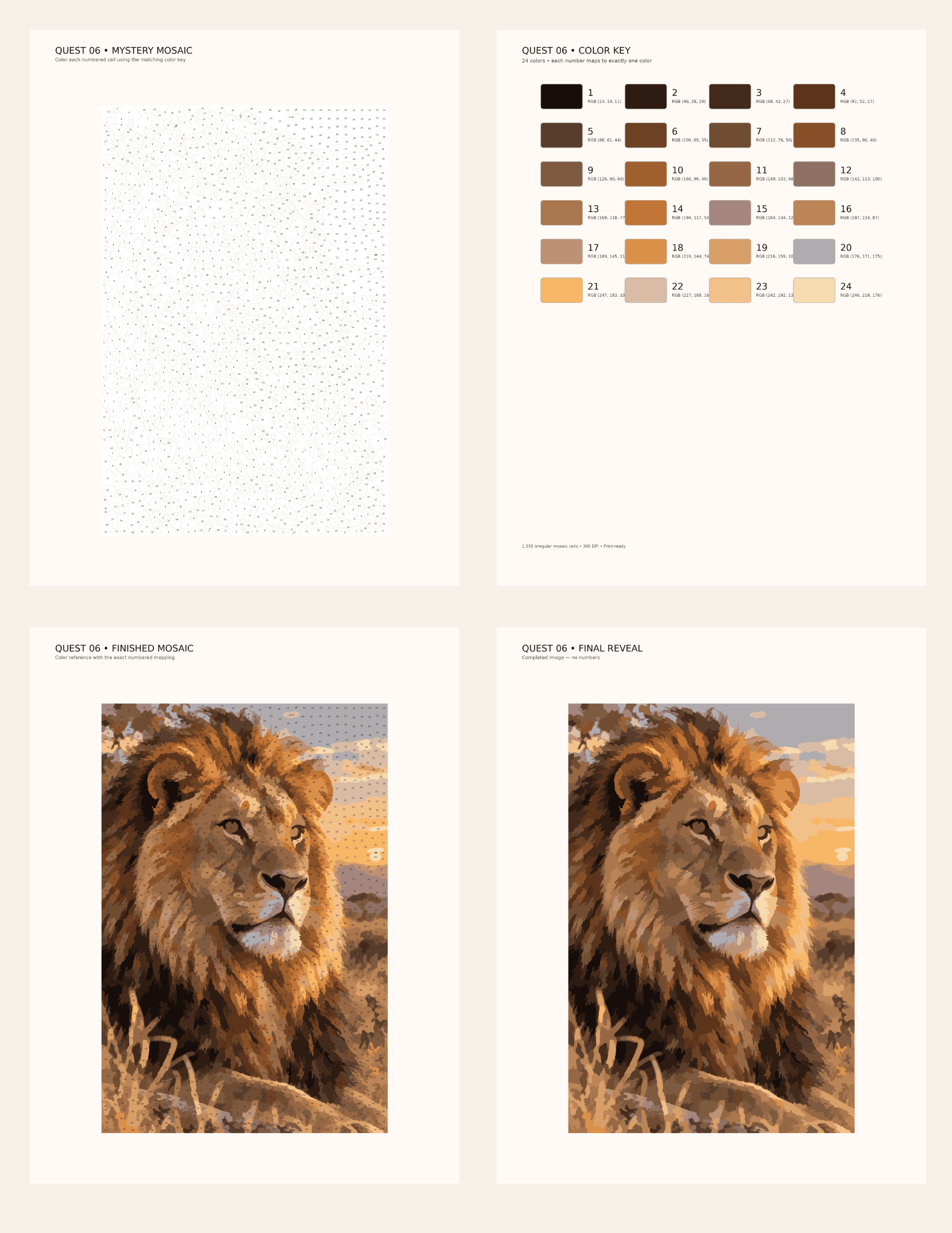
03. Lion Mystery Mosaic
The lion brings a stronger portrait feel. The mane creates a large field of changing shapes around the face, while the eyes, nose and muzzle gradually become the focal points of the completed artwork.

Lion
The Standard version provides more detail to work through, while Easy reduces the complexity. The same color-key method applies to both.
- Standard Mystery Mosaic
- Easy Mystery Mosaic
- Dedicated color keys
- US Letter printable PDF
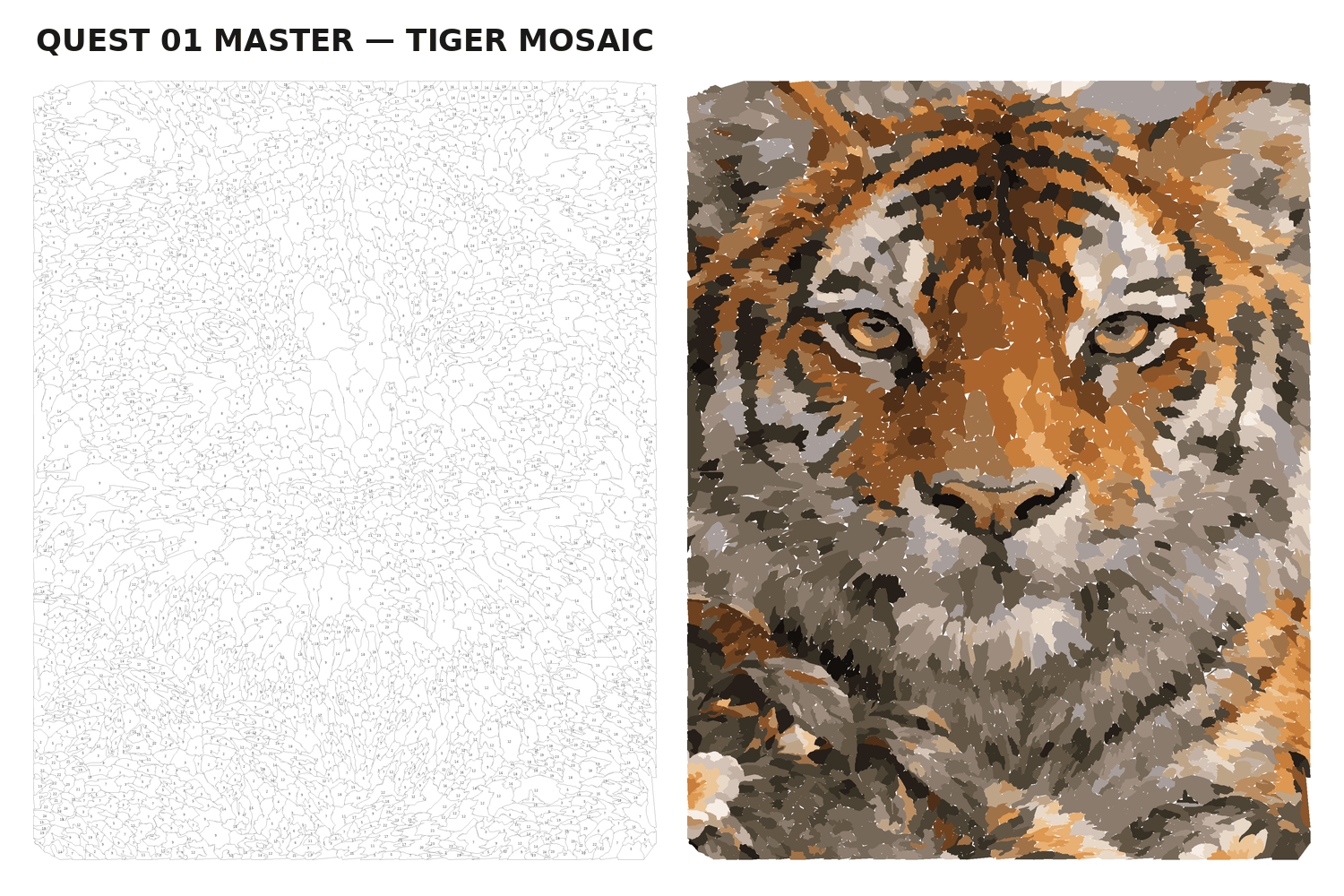
Master Proof
A master proof shows the artwork at a larger, more detailed scale and helps illustrate how the animal portrait is constructed.
Tiger
The tiger demonstrates how stripes and strong facial markings can create a recognizable mosaic structure.
04. Sea Turtle Mystery Mosaic
The sea turtle changes the visual rhythm of the collection. Instead of fur and facial markings, the mosaic relies on the shell, flippers and organic contours. It gives the set a marine subject and a completely different type of shape language.

Sea Turtle
This puzzle is useful when you want variety in the collection. The shell and flippers create large recognizable forms while the smaller cells add the mosaic challenge.
- Standard and Easy versions
- Dedicated color keys
- US Letter printable PDF
- Distinct marine wildlife subject
05. Giraffe Mystery Mosaic
The giraffe has one of the clearest natural patterns in the collection. Its irregular patches provide strong visual landmarks, while its long neck and head create a distinctive overall silhouette.

Giraffe
The contrast between larger recognizable areas and smaller numbered regions makes the giraffe a visually different ending to the collection.
- Standard Mystery Mosaic
- Easy Mystery Mosaic
- Standard and Easy color keys
- US Letter printable PDF
Standard vs Easy: Which Version Is Inside the PDFs?
Every animal file contains both versions, so you can choose the level of detail you want without needing a separate download.
| Feature | Standard Mystery Mosaic | Easy Mystery Mosaic |
|---|---|---|
| Grid experience | More detailed and more numbered regions | Simpler structure with larger or fewer areas |
| Color key | Included | Included |
| Format | US Letter PDF | US Letter PDF |
| Best use | When you want a longer, more detailed puzzle | When you want a simpler introduction |
How to Get Better Results When Coloring
Keep the color key visible
Place the key beside your page and check every number before coloring. This reduces mistakes and makes the process much smoother.
Work in small zones
Instead of scanning the entire page for one number, finish a manageable area and then move to the next.
Use suitable paper
Choose paper appropriate for your coloring tool. If you use markers, thicker paper can help reduce show-through.
Check before changing colors
Look back over a completed area before moving to another color. Small corrections are easier before the page becomes crowded.
Zoom out occasionally
Step back from the page every so often. A mosaic can look very different from a short distance than it does up close.
Keep your finished art
Once complete, the page can be photographed or displayed as a small piece of handmade wildlife art.
More Wildlife Mosaic Examples
The same visual language can be used across many animal subjects. These additional finished examples show how different animals can produce very different mosaic textures and silhouettes.
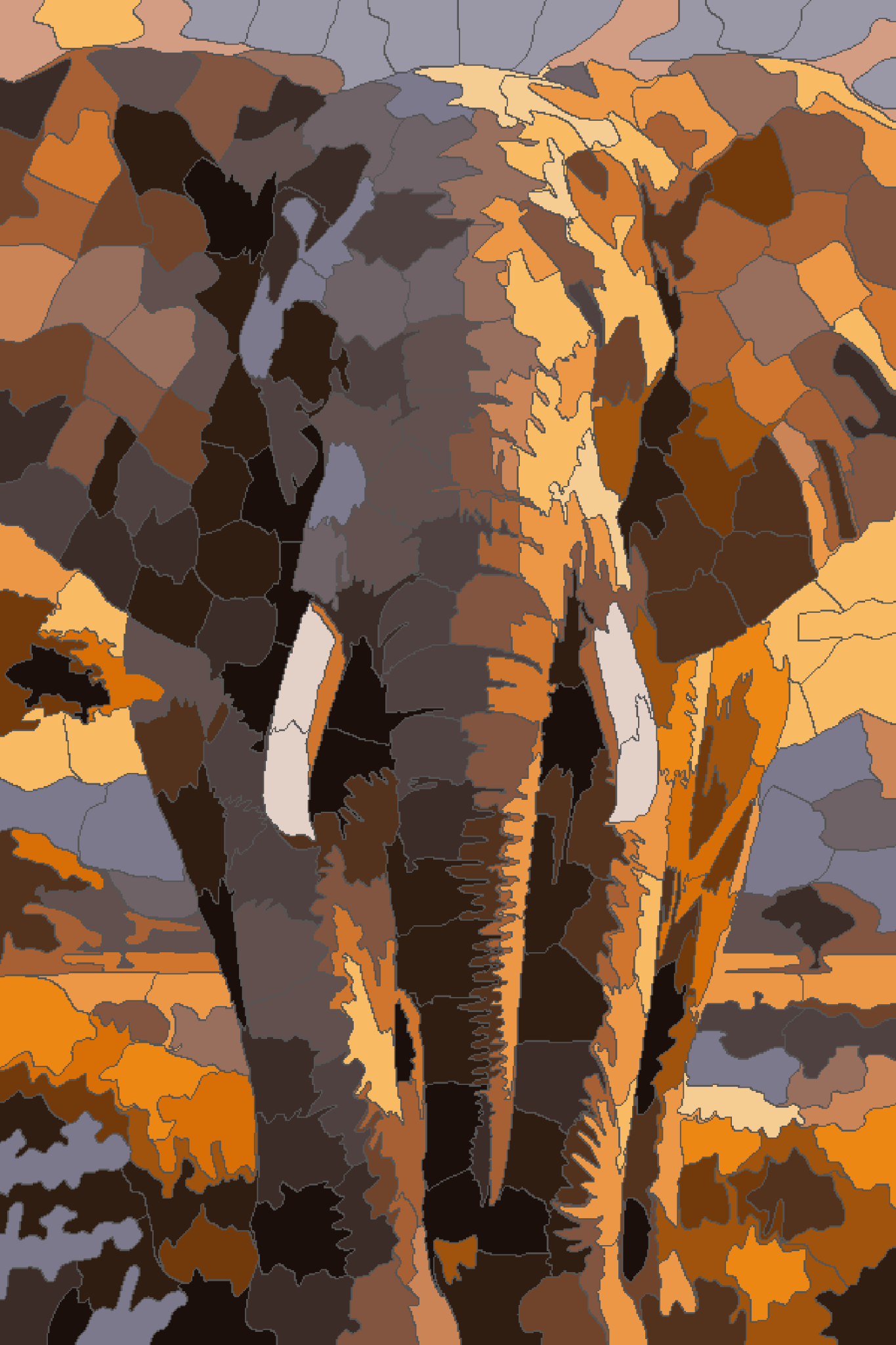
Elephant Reveal
The final reveal shows how a recognizable animal can emerge from a structured mosaic process.
Tiger
Strong stripes and facial features create a very different visual rhythm from the fox, lion or sea turtle.
Frequently Asked Questions
What exactly is a mystery mosaic?
It is a numbered coloring puzzle in which the final picture is discovered as you match numbers to the colors in the key.
Are the five animal puzzles printable?
Yes. Each animal above has its own US Letter PDF containing the Standard and Easy mystery mosaic versions and their corresponding color keys.
Do I need special coloring tools?
No special tool is required by the puzzle format. Choose a coloring tool and paper that work comfortably together for your preferred finish.
What is the difference between Standard and Easy?
Standard is more detailed, while Easy uses a simpler structure with larger or fewer areas. Both are included in each animal PDF.
Why does the picture look unclear at first?
That is part of the mystery-mosaic design. The image is intentionally revealed through the numbered areas rather than being fully visible before coloring.
Can I print these at home?
Yes. The files are prepared as US Letter PDFs. Open the animal PDF, print it at actual size, and keep its color key beside the puzzle.
Keep Exploring ChicCraft Ideas
If you enjoy visual puzzles and creative artwork, continue exploring other art collections on ChicCraft Ideas.
Choose an Animal and Start the Reveal
From the pointed silhouette of a fox to the patterned shell of a sea turtle, every puzzle gives you a different way to experience the same satisfying idea: follow the numbers, match the colors, and watch the wildlife image appear.
Explore More Art Ideas